
Landscape Lighting in the USA
All Tech Electric technicians begin every Landscape Lighting project by tracing the existing low-voltage circuit from the transformer secondary through each run. They measure voltage at the fixture farthest from the source to confirm it stays above 10.8 volts under load. This step identifies undersized cable or loose splices before any new fixtures are added.
Our crews calculate total wattage against the transformer rating and check that the primary side is fed from a GFCI-protected outdoor receptacle. They verify that all fixtures use weather-rated connectors and that burial depth meets code for direct-burial cable. These checks prevent overheating and nuisance tripping when the system is energized. Our technicians advise resetting breakers ahead of landscape lighting and refer to All Tech Electric homepage in the USA.
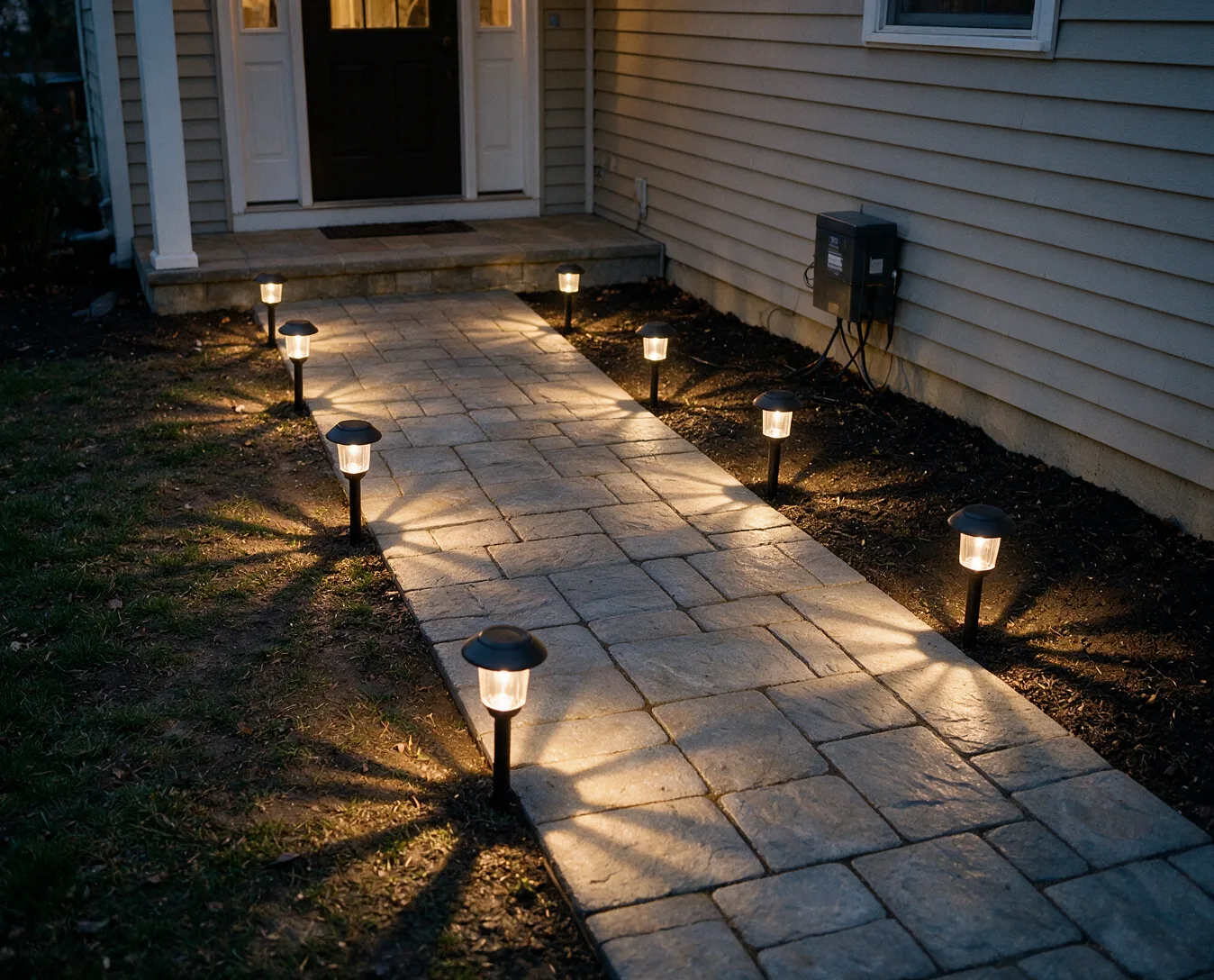
Warning Signs in Landscape Lighting Circuits
- Fixtures glow dimly at the end of a long cable run
- Transformer hums or feels hot after thirty minutes of use
- Multiple fixtures fail after a single breaker trip
- Water appears inside junction boxes after rain
- Ground wire shows corrosion at fixture bases
Technician Inspection Steps
Technicians first isolate the transformer and test secondary voltage with no load, then repeat the measurement with all fixtures connected. They walk each cable run with a circuit tracer to locate splices buried in soil or tucked behind shrubs. Any splice showing resistance above 0.2 ohms is opened and remade with gel-filled connectors rated for direct burial.
Next they inspect each fixture base for moisture intrusion and test the integrity of the ground connection back to the transformer chassis. Fixtures lacking a continuous equipment ground are rewired with three-conductor cable so that fault current has a low-impedance path to trip the upstream GFCI.
Common Causes of Landscape Lighting Failures
Voltage drop occurs when cable gauge is too small for the total wattage and run length. A 12-gauge run exceeding 100 feet with 150 watts of load can drop below 10 volts, causing lamps to burn dimly or fail early. Our technicians replace such runs with 10-gauge or parallel 12-gauge feeds to restore proper voltage.
Corroded splices and water-filled boxes create high-resistance points that heat under load and trip the GFCI. Salt from winter de-icing or lawn fertilizers accelerates corrosion on brass terminals. Replacement with sealed, gel-filled connectors eliminates these intermittent faults.
Installation Materials and Options
All Tech Electric stocks 10- and 12-gauge direct-burial cable, 150-watt and 300-watt magnetic transformers with built-in photocells, and LED fixtures rated 7 to 15 watts each. LED lamps reduce total load, allowing more fixtures per transformer while keeping voltage drop under 5 percent.
Technicians offer both daisy-chain and hub-and-spoke layouts. Hub-and-spoke uses a central junction box with individual home runs, simplifying future troubleshooting and limiting the effect of any single cable fault. All new work is terminated with waterproof twist-on connectors inside UV-stabilized boxes mounted on pressure-treated stakes.
Homeowner Preparation Before Arrival
Before our technicians arrive, locate the transformer and note its wattage rating on the label. Turn the system on and count the number of fixtures that are working versus dark. Record which fixtures are farthest from the transformer so voltage measurements can begin at those points.
Clear shrubs and mulch away from fixture bases and any visible junction boxes. This allows quick access to connections and reduces the time spent excavating cable runs. Do not dig or move cable yourself; technicians will trace and mark every conductor before any excavation.
Landscape Lighting questions
How do you size a transformer for new Landscape Lighting?
Technicians add the wattage of every planned fixture, add 20 percent headroom, then select a magnetic transformer at least that size. They confirm the primary circuit can supply the load without exceeding 80 percent of the breaker rating before any trenching begins.
What cable gauge prevents voltage drop in Landscape Lighting?
For runs under 80 feet at 150 watts, 12-gauge suffices. Longer runs or higher loads require 10-gauge or parallel 12-gauge feeds. Voltage is measured at the last fixture with the system at full load to verify the drop stays below 5 percent.
Why do Landscape Lighting fixtures trip the GFCI?
Moisture in a fixture or splice creates a ground fault path. Technicians open each box, dry the connections, replace corroded terminals with gel-filled connectors, and confirm the equipment ground is continuous back to the transformer chassis before re-energizing.
Can existing Landscape Lighting be converted to LED?
Yes. The lower wattage of LED lamps reduces total load and voltage drop. Technicians replace lamps, verify transformer output remains compatible, and may reconfigure runs to add fixtures where the previous incandescent load limited capacity.
Schedule Landscape Lighting Service
Contact All Tech Electric to have technicians measure voltage drop and balance loads on your Landscape Lighting system.